

Using the Emergency Flat Tire Repair Kit
U.S.A. and Canada
-
Move the vehicle off the right-of-way to a safe place on a level and hard surface where the vehicle does not obstruct traffic.
-
Shift the shift lever to the 1 or Reverse (R) position for a manual transmission, and shift the selector lever to the P position for an automatic transmission.
-
Apply the parking brake with the brake pedal depressed and turn off the engine.
-
If necessary, flash the hazard warning lights and set up the roadside emergency triangle.
-
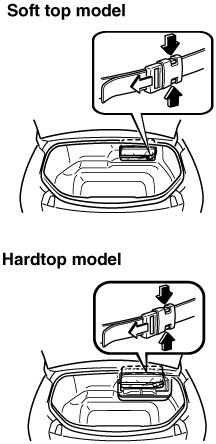
Unload passengers and cargo and remove the emergency flat tire repair kit.
-
Shake the sealant bottle to mix the contents. Then extend the injection hose.
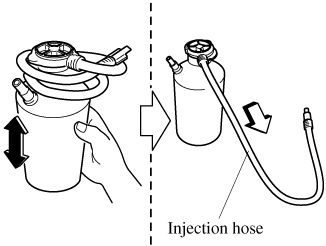
Do not shake the bottle excessively. Otherwise, the sealant could spray out of the injection hose, and if the sealant contacts clothing or other objects, you may not be able to remove it.
The sealant hardens easily and injecting it will be difficult under cold weather conditions (0 °C (32 °F) or below). Warm the sealant inside the vehicle to facilitate injection.
-
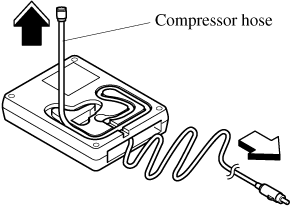
Pull out the air compressor hose and the air compressor plug from the air compressor.
-
Install the air compressor hose which was pulled out of the air compressor to the injection valve of the bottle.
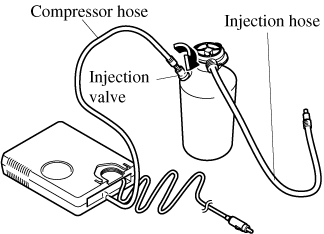
Make sure that the air compressor switch is off before inserting the air compressor hose to the injection valve of the bottle. If the air compressor hose is not installed to the injection valve of the bottle securely, the sealant may leak.
-
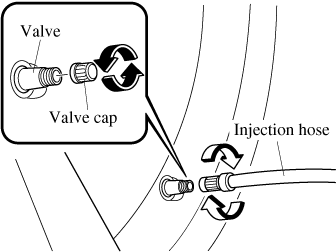
Remove the valve cap from the valve of the flat tire, install the injection hose to the tire valve, turn the sleeve to the right, and tighten it.
-
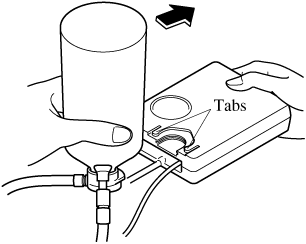
Install the bottle to the air compressor and press it in until the left and right tabs are engaged securely.
-
Insert the air compressor plug into the accessory socket inside the vehicle and switch the ignition to ACC.
Refer to Accessory Sockets (Search).
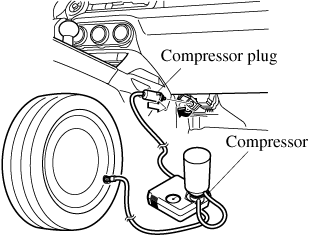
When inserting the air compressor plug into or removing it from the accessory socket, make sure that the air compressor switch is off. When turning the air compressor on/off, use the air compressor switch.
-
The sealant is injected into the tire when the air compressor is switched on. After the sealant is injected completely, wait until the tire inflation pressure increases to the specified tire inflation pressure.
The inflation pressure may increase to about 300 kPa (3.1 kgf/cm2, 3 bar, 43.5 psi) temporarily to inject the sealant through the valve. Normally, the inflation pressure decreases gradually and it reaches the actual inflation pressure after about 30 seconds.
Never use the air compressor above 300 kPa (3.1 kgf/cm2, 3 bar, 43.5 psi):
Using the air compressor at an inflation pressure above 300 kPa (3.1 kgf/cm2, 3 bar, 43.5 psi) continuously is dangerous. If the air compressor overheats, hot air will be exhausted and you could get burned.
-
Check the tire inflation pressure label driver's door frame for the correct tire inflation pressure.
-
Do not operate the air compressor for a continuous 10 minutes or longer because using it for long periods could cause a malfunction.
-
If the tire inflation pressure does not increase, repair of the tire is not possible. If the tire does not reach the specified tire inflation pressure within 10 minutes, it may have received extensive damage. In this case, the repair using the emergency flat tire repair kit was not successful. Contact an Authorized Mazda Dealer.
-
-
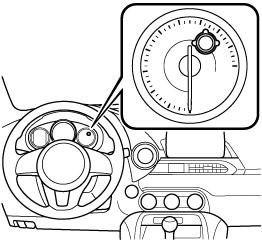
Adhere the speed restriction sticker to an area where it can be viewed easily by the driver.
-
Adhere the repaired tire sticker to the wheel of the flat tire.
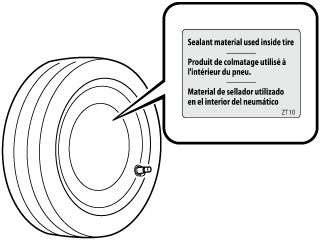
Do not adhere the speed restriction sticker to the padded area on the steering wheel:
Adhering the speed restriction sticker to the padded area on the steering wheel is dangerous because the air bag may not operate (deploy) normally resulting in serious injury. In addition, do not adhere the sticker to areas where warning lights or the speedometer cannot be viewed.
-
When the tire inflates to the specified tire inflation pressure, turn the air compressor switch off, turn the sleeve of the injection hose to the left, and pull it out of the tire valve.
-
Remove the air compressor hose from the injection valve of the bottle. After that, install the injection hose to the injection valve of the bottle to prevent leakage of any remaining sealant.
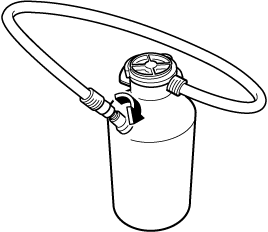
The remaining sealant in the hose may spray out when the hose is removed. Remove the hose carefully because you may not be able to remove the sealant contacting clothing or other objects.
-
Install the tire valve cap.
-
Put the emergency flat tire repair kit into the trunk.
-
Start driving immediately to spread the sealant in the tire.
Carefully drive the vehicle at a speed of 80 km/h (50 mph) or less. If the vehicle is driven at a speed of 80 km/h (50 mph) or more, the vehicle may vibrate.
If the tire is not properly inflated, the tire pressure monitoring system warning light will illuminate (Search).
-
After driving the vehicle for about 10 minutes or 5 km (3 miles), connect the air compressor to the tire using Step 9 of the procedure, and check the tire inflation pressure using the tire pressure gauge on the air compressor. If the tire inflation pressure is lower than the specified tire inflation pressure, turn the air compressor on and wait until it reaches the specified tire inflation pressure.
If the tire inflation pressure has decreased below 130 kPa (1.3 kgf/cm2 or bar, 18.9 psi), stop driving and contact an Authorized Mazda Dealer:
The repair using the emergency flat tire repair kit was not successful.
If you see a decrease in the tire inflation pressure, even if Steps 9 to 20 of the procedure are performed repeatedly, stop driving:
Contact an Authorized Mazda Dealer.
Before checking the tire inflation pressure using the tire pressure gauge, turn the air compressor switch off.
-
The emergency flat tire repair is completed successfully if the tire inflation pressure does not decrease. Carefully drive the vehicle to the nearest Authorized Mazda Dealer immediately and have the flat tire replaced. Replacement with a new tire is recommended. If the tire is to be repaired or reused, consult an Authorized Mazda Dealer.
-
If an emergency flat tire repair has been performed using the emergency flat tire repair kit, Mazda recommends that the tire be replaced with a new one as soon as possible. If the tire is to be repaired or reused, consult an Authorized Mazda Dealer.
-
The wheel can be reused if the sealant adhering to it is removed. However, replace the valve with a new one.
-


Mexico
-
Move the vehicle off the right-of-way to a safe place on a level and hard surface where the vehicle does not obstruct traffic.
-
Shift the shift lever to the 1 or Reverse (R) position for a manual transmission, and shift the selector lever to the P position for an automatic transmission.
-
Apply the parking brake with the brake pedal depressed and turn off the engine.
-
If necessary, flash the hazard warning lights and set up the roadside emergency triangle.
-
Unload passengers and cargo and remove the emergency flat tire repair kit.
-
Shake the tire sealant well.
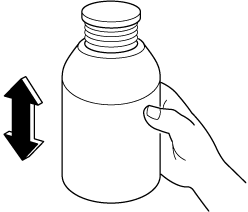
If the bottle is shaken after the injection hose is screwed on, tire sealant could spray out from the injection hose. Tire sealant contacting clothing or other objects may be impossible to remove. Shake the bottle before screwing on the injection hose.
The sealant hardens easily and injecting it will be difficult under cold weather conditions (0 °C (32 °F) or below). Warm the sealant inside the vehicle to facilitate injection.
-
Remove the cap from the bottle. Screw on the injection hose with the bottle's inner cap left on to break the inner cap.
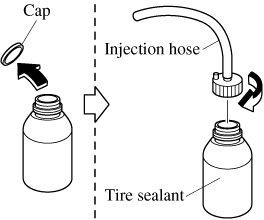
-
Remove the valve cap from the flat tire. Press the back of a valve core tool to the core of the tire valve and bleed all the remaining air.
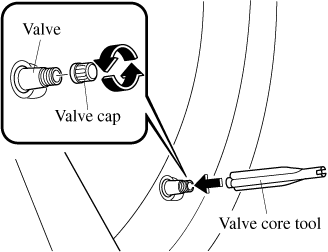
If there is air remaining in the tire when the valve core is removed, the valve core could fly out. Remove the valve core carefully.
-
Turn the valve core counterclockwise with the valve core tool and remove the valve core.

-
Insert the injection hose into the valve.
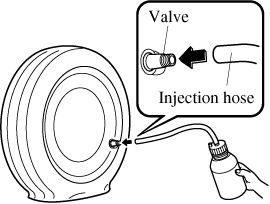
-
Hold the bottom of the bottle upright, squeeze the bottle with your hands, and inject the entire amount of tire sealant into the tire.
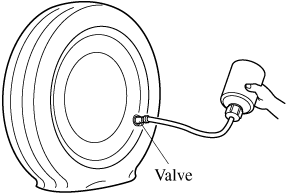
-
Pull out the injection hose from the valve.
The tire sealant cannot be reused. Purchase a new tire sealant kit at an Authorized Mazda Dealer.
-
Reinsert the valve core into the valve and turn it clockwise to install it.
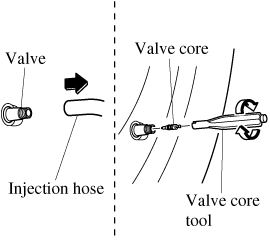
Do not throw away the empty tire sealant bottle after use. Return the empty tire sealant bottle to an Authorized Mazda Dealer when replacing the tire. The empty tire sealant bottle will need to be used to extract and dispose of the used sealant from the tire.
-
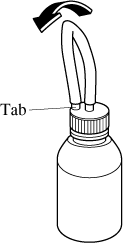
After that, install the injection hose to the tab of the bottle to prevent leakage of any remaining sealant.
-
Adhere the speed restriction sticker to an area where it can be viewed easily by the driver.
Do not adhere the speed restriction sticker to the padded area on the steering wheel:
Adhering the speed restriction sticker to the padded area on the steering wheel is dangerous because the air bag may not operate (deploy) normally resulting in serious injury. In addition, do not adhere the sticker to areas where warning lights or the speedometer cannot be viewed.
-
Pull out the air compressor hose and the air compressor plug from the air compressor.
-
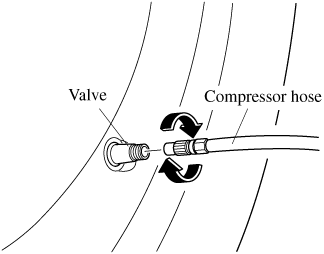
Install the air compressor hose to the tire valve.
-
Insert the air compressor plug into the accessory socket inside the vehicle and switch the ignition to ACC.
Refer to Accessory Sockets (Search).
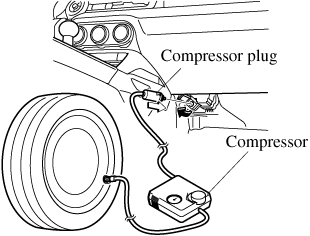
When inserting the air compressor plug into or removing it from the accessory socket, make sure that the air compressor switch is off. When turning the air compressor on/off, use the air compressor switch.
-
Turn the air compressor switch on and inflate the tire carefully to the correct inflation pressure.
-
Check the tire inflation pressure label driver's door frame for the correct tire inflation pressure.
-
Do not operate the air compressor for a continuous 10 minutes or longer because using it for long periods could cause a malfunction.
-
If the tire inflation pressure does not increase, repair of the tire is not possible. If the tire does not reach the specified tire inflation pressure within 10 minutes, it may have received extensive damage. In this case, the repair using the emergency flat tire repair kit was not successful. Contact an Authorized Mazda Dealer.
-
If the tire has been over-inflated, loosen the screw cap on the air compressor and bleed some of the air out.
-
-
When the tire inflates to the specified tire inflation pressure, turn the air compressor switch off, turn the sleeve of the air compressor hose to the left, and pull it out of the tire valve.
-
Install the tire valve cap.
-
Put the emergency flat tire repair kit into the trunk.
-
Start driving immediately to spread the sealant in the tire.
Carefully drive the vehicle at a speed of 80 km/h (50 mph) or less. If the vehicle is driven at a speed of 80 km/h (50 mph) or more, the vehicle may vibrate.
If the tire is not properly inflated, the tire pressure monitoring system warning light will illuminate (Search).
-
After driving the vehicle for about 10 minutes or 5 km (3 miles), connect the air compressor to the tire using Step 17 of the procedure, and check the tire inflation pressure using the tire pressure gauge on the air compressor. If the tire inflation pressure is lower than the specified tire inflation pressure, turn the air compressor on and wait until it reaches the specified tire inflation pressure.
If the tire inflation pressure has decreased below 130 kPa (1.3 kgf/cm2 or bar, 18.9 psi), stop driving and contact an Authorized Mazda Dealer:
The repair using the emergency flat tire repair kit was not successful.
If you see a decrease in the tire inflation pressure, even if Steps 17 to 24 of the procedure are performed repeatedly, stop driving:
Contact an Authorized Mazda Dealer.
Before checking the tire inflation pressure using the tire pressure gauge, turn the air compressor switch off.
-
The emergency flat tire repair is completed successfully if the tire inflation pressure does not decrease. Carefully drive the vehicle to the nearest Authorized Mazda Dealer immediately and have the flat tire replaced. Replacement with a new tire is recommended. If the tire is to be repaired or reused, consult an Authorized Mazda Dealer.
-
If an emergency flat tire repair has been performed using the emergency flat tire repair kit, Mazda recommends that the tire be replaced with a new one as soon as possible. If the tire is to be repaired or reused, consult an Authorized Mazda Dealer.
-
The wheel can be reused if the sealant adhering to it is removed. However, replace the valve with a new one.
-
